วันอังคารที่ 6 เมษายน พ.ศ. 2553
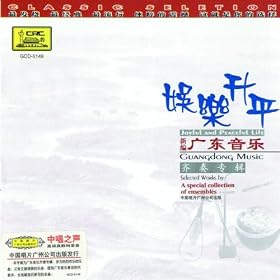
Xin Bian Guang Dong Yin Le : Yu Le Sheng Ping (Guangdong Music: Joyful And Peaceful Life)
* Original Release Date: January 1, 2001

The Guangzhou Taxi Guide (Hardcover)
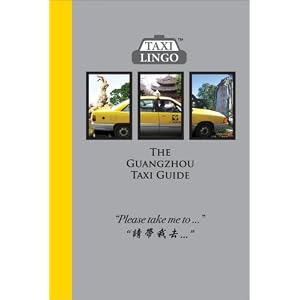
Don't let taking a taxi in this Asian city worry you when you have this simple tool to help you communicate with the driver. The process is simple and effective. First , find the page with your destination and either mark the location with the provided arrow sticker or mark the page with the ribbon. Second, show the taxi driver the page with your destination and he will have no problem understanding where you want to go. It's that easy. No more communication problems! This guide will help you get to all of the city s most frequented destinations as well as to some of the more off the beaten-track locations that add so much to this city's charm.


วันศุกร์ที่ 5 มีนาคม พ.ศ. 2553
Guangdong Olympic Stadium
The Guangdong Olympic Stadium is a multi-purpose stadium in Guangzhou, People's Republic of China. Currently used mostly for football matches, the stadium was built in 2001. It has a capacity of 80,012 with multi-colored seats, positioned in multiple sections, and are connected via a ribbon pattern.[2]
The Guangdong Olympic Stadium was opened to the public for the ninth National Games of the People's Republic of China in 2001. It was originally planned to help host the 2008 Summer Olympics[3] until a decision was made to construct the National Stadium in Beijing. The original design for the Guangdong Olympic Stadium was announced in 1999. Taking Guangzhou's nickname, the Flower City, the American architectural firm of Ellerbe Becket designed Guangdong Olympic Stadium's sunscreen roof to resemble layers of petals on a flower[4]. The design firm stated in its press release: "The stadium bowl grows out of the ground to a sculpted upper edge, like the petals of a flower. Floating above the bowl is a shimmering ribbon of roof flowing like a wave over the seats. It parts at the ends and holds the Olympic flame, suspended between the two ribbons. A hotel surrounds a circular opening in the roof that forms a vertical tower of light, which at night is visible for a great distance."
form: http://en.wikipedia.org/wiki/Guangdong_Olympic_Stadium
The Guangdong Olympic Stadium was opened to the public for the ninth National Games of the People's Republic of China in 2001. It was originally planned to help host the 2008 Summer Olympics[3] until a decision was made to construct the National Stadium in Beijing. The original design for the Guangdong Olympic Stadium was announced in 1999. Taking Guangzhou's nickname, the Flower City, the American architectural firm of Ellerbe Becket designed Guangdong Olympic Stadium's sunscreen roof to resemble layers of petals on a flower[4]. The design firm stated in its press release: "The stadium bowl grows out of the ground to a sculpted upper edge, like the petals of a flower. Floating above the bowl is a shimmering ribbon of roof flowing like a wave over the seats. It parts at the ends and holds the Olympic flame, suspended between the two ribbons. A hotel surrounds a circular opening in the roof that forms a vertical tower of light, which at night is visible for a great distance."
form: http://en.wikipedia.org/wiki/Guangdong_Olympic_Stadium
2010 Asian Games
The 16th Asian Games (also known as the XVI Asiad) will be held in Guangzhou, China from November 12 to November 27, 2010. Guangzhou will be the second city in China to host the games after Beijing in 1990. 42 sports are scheduled to be contested, making it the largest Asian Games ever.
The inaugural 1st Asian Para Games, the parallel sport event for disabled Asian athletes, opens December 12 and closes December 19, 2010, two weeks after the conclusion of the 16th Asian Games. The gap in between the Games will be used by organizers to convert all athlete accommodations, meeting halls, training and competition venues used by the Asian Games into disability-accessible facilities.
Marketing
The emblem of this Games from the Sun Yat-sen Memorial Hall is a stylized goat, which, in Chinese tradition, is a blessing and brings people luck. It is also a representative symbol of the host city Guangzhou, which is called the "City of Goats" or "City of the Five Rams".[5]
Five sporty goats, dubbed "Le Yangyang," will serve as the mascots of the 2010 Asian Games in Guangzhou.[6][7] The five goats - A Xiang (祥), A He (和), A Ru (如), A Yi (意) and Le Yangyang (樂洋洋), are a play on Guangzhou's nickname, "City of Goats". Moreover, the Chinese character "yang" or "goat" is also an auspicious symbol, because, when read together, the Chinese names of the five goats are a message of blessing, literally means "harmony, blessings, success and happiness" (祥和如意樂洋洋).[8]
The mascot design is based on a legend about five immortals who took five goats to Guangzhou, each holding an ear of corn in its mouth. There, the immortals prayed for an end to famine, then flew into the sky as the five goats turned into fossils.
form: http://74.125.153.132/search?q=cache:7R17LAJMMiIJ:en.wikipedia.org/wiki/2010_Asian_Games+guangzhou-2010&cd=3&hl=th&ct=clnk&gl=th&client=firefox-a
The inaugural 1st Asian Para Games, the parallel sport event for disabled Asian athletes, opens December 12 and closes December 19, 2010, two weeks after the conclusion of the 16th Asian Games. The gap in between the Games will be used by organizers to convert all athlete accommodations, meeting halls, training and competition venues used by the Asian Games into disability-accessible facilities.
Bid
Four cities bidded to host this event in early March 2004. They were Amman, Guangzhou, Kuala Lumpur and Seoul. However, Seoul withdrew after considering the short span of time between the 2002 (in Busan, South Korea) and the 2010 event.[1] With the withdrawal of Amman, soon after Seoul, Kuala Lumpur also quit the bid after the country's Sports Minister cited the high cost of hosting the Games.[2][3] With Guangzhou left, the Olympic Council of Asia announced the city won the bid to host the Asian Games on July 1, 2004
Marketing
The emblem of this Games from the Sun Yat-sen Memorial Hall is a stylized goat, which, in Chinese tradition, is a blessing and brings people luck. It is also a representative symbol of the host city Guangzhou, which is called the "City of Goats" or "City of the Five Rams".[5]
Five sporty goats, dubbed "Le Yangyang," will serve as the mascots of the 2010 Asian Games in Guangzhou.[6][7] The five goats - A Xiang (祥), A He (和), A Ru (如), A Yi (意) and Le Yangyang (樂洋洋), are a play on Guangzhou's nickname, "City of Goats". Moreover, the Chinese character "yang" or "goat" is also an auspicious symbol, because, when read together, the Chinese names of the five goats are a message of blessing, literally means "harmony, blessings, success and happiness" (祥和如意樂洋洋).[8]
The mascot design is based on a legend about five immortals who took five goats to Guangzhou, each holding an ear of corn in its mouth. There, the immortals prayed for an end to famine, then flew into the sky as the five goats turned into fossils.
form: http://74.125.153.132/search?q=cache:7R17LAJMMiIJ:en.wikipedia.org/wiki/2010_Asian_Games+guangzhou-2010&cd=3&hl=th&ct=clnk&gl=th&client=firefox-a
สมัครสมาชิก:
บทความ (Atom)